What Documents Do You Need for Business Finance?
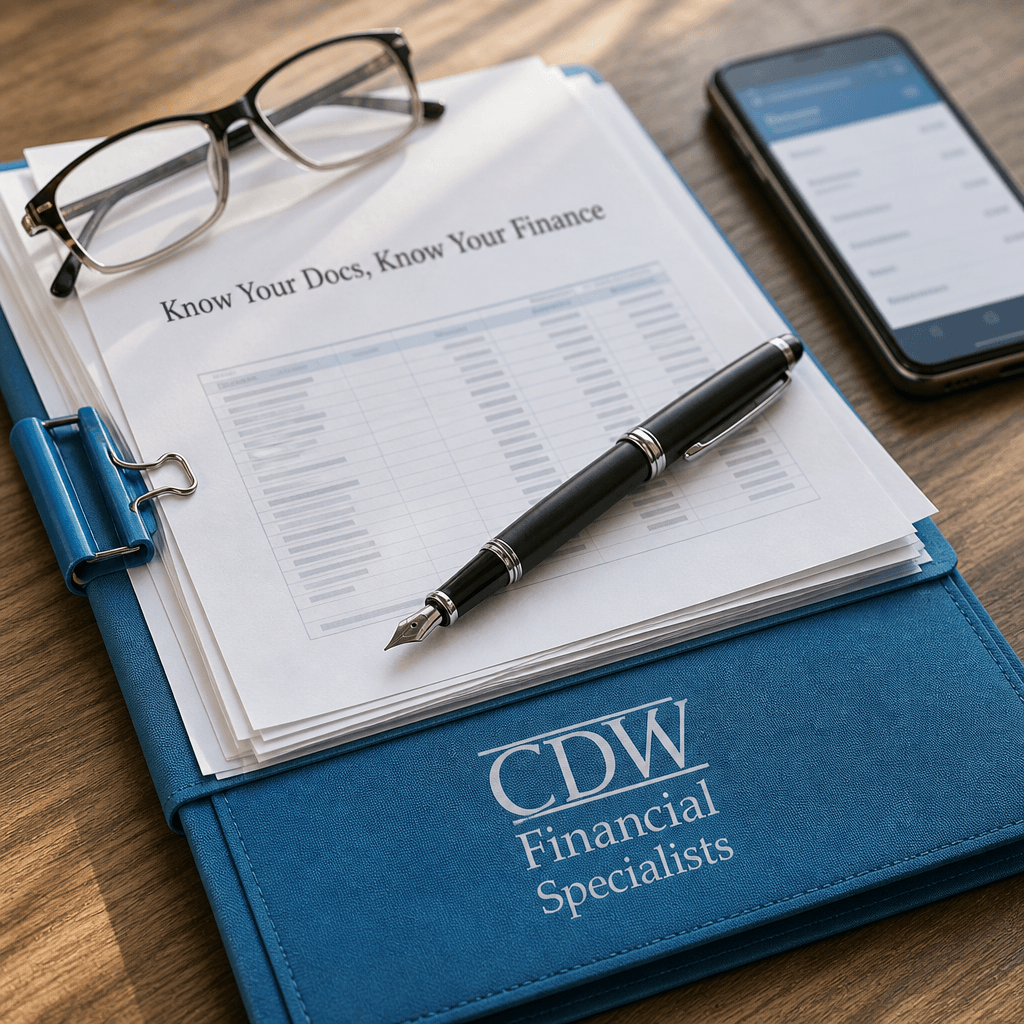
Most lenders ask for six months of bank statements, your last two years of filed accounts, management accounts if your last year end was over three months ago, a schedule of any existing debt, proof of ID and address for directors, and a short explanation of what the funding is for. Exactly which documents matter depends on the lender and the type of finance, but having these ready before you apply cuts weeks off the process.
Why does having the right paperwork matter so much?
Lenders make decisions on evidence, not conversation. A clean set of documents lets an underwriter see cashflow patterns, debt exposure, and trading history in one pass, rather than chasing you for clarification three times over a fortnight. We've seen straightforward applications stall for a month simply because a director sent personal bank statements instead of the business account, or submitted accounts that were two years out of date. Getting the paperwork right the first time is often the single biggest factor in how fast an offer comes back.
What financial documents do lenders always ask for?
Across working capital, asset finance, and property finance, a core set of documents comes up again and again:
- Six months of business bank statements: lenders read these for turnover trends, existing borrowing, bounced payments, and how tight cashflow runs month to month.
- Two years of filed accounts: this is what Companies House already has, and it's the baseline picture of the business's financial health.
- Management accounts: if your last year end is more than three months behind you, lenders expect an up-to-date profit and loss and balance sheet to fill the gap.
- A schedule of existing debt: any loans, asset finance agreements, or credit lines currently running, including balances and monthly repayments.
- Director ID and proof of address: standard anti-money-laundering checks, usually a passport or driving licence plus a recent utility bill or bank statement.
- A brief statement of purpose: what the money is for, whether that's stock, equipment, a property purchase, or bridging a cashflow gap.
Does it matter if my business has CCJs, VAT arrears, or is loss-making?
It changes what you need to provide, not whether you can apply. If your business has County Court Judgements, VAT arrears, or is trading at a loss, lenders will want more context alongside the standard documents: an explanation of what caused the arrears, evidence of a payment plan with HMRC if one exists, and a clearer picture of current trading rather than historical accounts alone. We work with businesses in exactly this position regularly, including companies trading whilst insolvent, and the right lender on our panel will look past a difficult balance sheet if the underlying trade still makes sense. The documents don't need to tell a perfect story. They need to tell an honest one.
What extra documents are needed for asset finance or property finance?
Asset finance applications usually need a quote or invoice for the equipment or vehicle being purchased, plus details of any deposit or part-exchange. Property finance, including bridging loans, typically requires proof of the property's value (a recent valuation or purchase agreement), details of the exit strategy (how the loan will be repaid), and title documents if you already own the asset.
Some of our property lending routes are built specifically for businesses that can't produce the standard paperwork at all. These require no monthly repayments during the loan term and no income proof, affordability assessment, or credit search, which makes them useful for businesses that need funding fast but don't fit a high street bank's checklist.
How far back do bank statements and accounts need to go?
Six months of business bank statements is the standard ask, though some lenders want twelve if turnover is seasonal or irregular. Filed accounts should cover the last two financial years. If your most recent year end was more than three months ago, add management accounts to bridge the gap, since lenders don't want to base a decision on figures that are a year or more out of date.
What if my documents don't paint a great picture?
This is where most business owners hesitate, and it's usually unnecessary hesitation. A weak set of numbers doesn't rule out finance, it just narrows the pool of lenders who'll say yes and changes which product fits. A business with cashflow strain might be better suited to a working capital facility or a cashflow review than a traditional loan. A business with a CCJ might still qualify for asset finance if the asset itself provides security. Sending the documents as they are, with an honest explanation attached, gets you a real answer faster than trying to tidy the picture first.
Common questions about business finance documents
Do I need an accountant to prepare my documents?
Not necessarily. Bank statements and ID documents you can provide yourself. Management accounts are easier with an accountant's help, but if you don't have one, we can talk through what's genuinely needed for your situation and help you put together something workable.
What if my accounts are overdue or I haven't filed this year's yet?
Tell the lender upfront rather than waiting to be asked. Late or overdue accounts are common among businesses under pressure, and there are lenders on our panel who will still consider an application with a clear explanation and recent management figures instead.
Can I apply if I don't have six months of clean bank statements?
Yes. Newer businesses or those that changed banks recently can still apply. The lender may ask for statements from a previous account or rely more heavily on management accounts and the purpose of the funding.
How long does it take once my documents are ready?
It varies by lender and finance type, but having a complete document set from the outset is what determines whether an application takes days or weeks. Missing paperwork is the most common cause of delay we see.
Getting your application right the first time
Chasing the right paperwork while running a business is a distraction most owners don't have time for, especially when cashflow is already tight or a decision needs to happen quickly. That's the part of the process we take off your plate at CDW Financial Specialists: we review what you've got, tell you plainly what's missing, and match your situation to the right lender on our panel rather than sending you off to approach several banks separately.
If you're preparing a finance application, whether that's working capital, asset finance, or property finance, get in touch with us before you submit anything. We'll tell you exactly what documents your situation needs and manage the process through to completion, with every fee discussed upfront and no surprises along the way.