

Debentures What a Lender’s Charge Means for Your Business
You’ve secured the funding. The paperwork is signed, the money is in your account, and you’re ready to move forward. But buried in that loan agreement is a clause that many business owners gloss over in the moment and only fully reckon with later: the debenture. Understanding what it actually means when a lender takes a charge over your business could be one of the most important things you do for your long-term financial health.
What Is a Debenture?
A debenture is a legal document that gives a lender security over your business assets in exchange for providing a loan or credit facility. Think of it as the lender’s insurance policy. If your business can’t repay what it owes, the debenture gives them the legal right to step in and recover the debt by taking control of, or selling, the assets they hold a charge over.
For limited companies in the UK, debentures are registered at Companies House, which means they are publicly visible. Anyone searching your company’s record can see that a lender holds a charge, and crucially, they can see its priority ranking relative to any other charges.
This matters far more than most business owners realise at the time of signing.
Fixed Charges vs. Floating Charges
Most debentures contain two types of security, often bundled together.
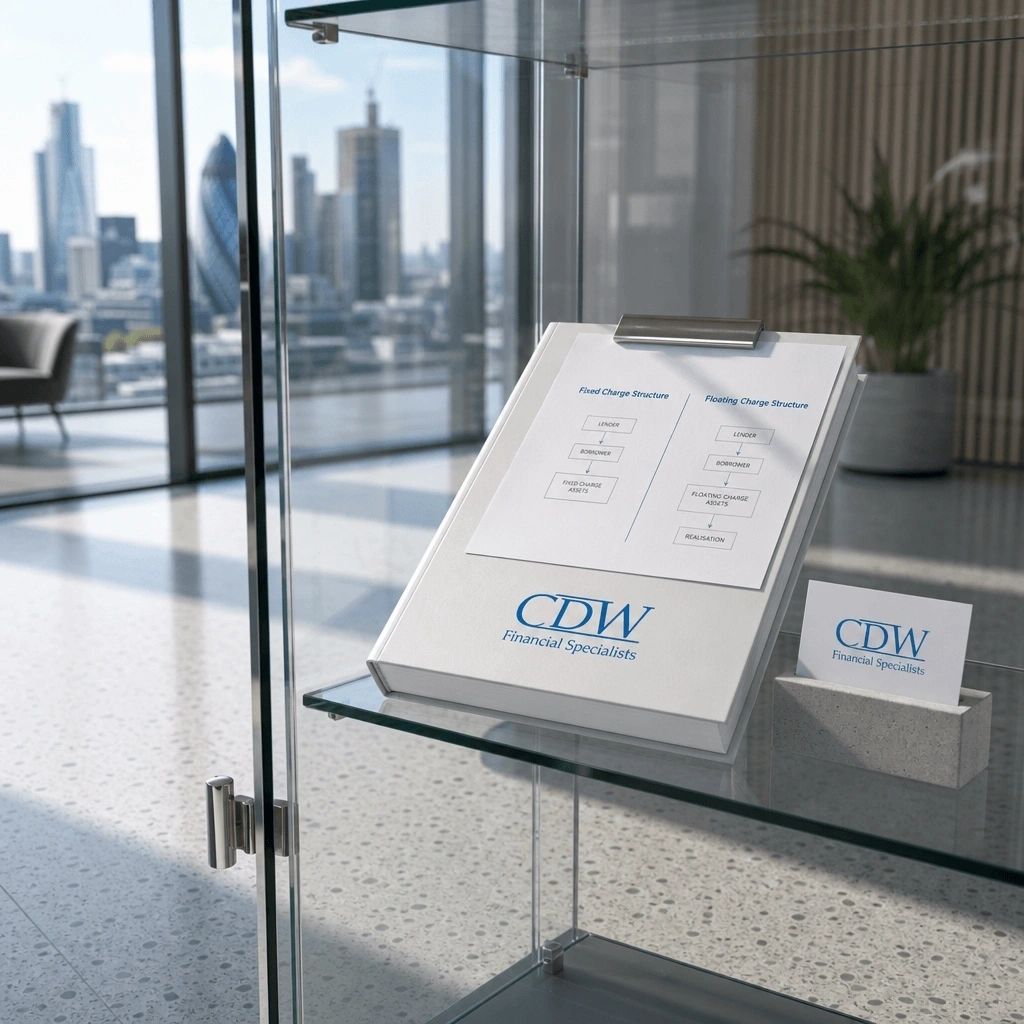
A fixed charge attaches to a specific, identifiable asset. This is typically property, land, or high-value equipment. Once a fixed charge is in place, you cannot sell or dispose of that asset without the lender’s explicit consent. The lender’s claim on it is static and concrete.
A floating charge works differently. It hovers over a class of assets that naturally changes as your business operates, things like your stock, trade debtors, and cash in the bank. These assets shift in value day to day. The charge “floats” above them until a trigger event causes it to crystallise, at which point it converts into a fixed charge and locks down whatever assets are in that pool at that moment.
Common crystallisation triggers include defaulting on the loan, entering administration, or the appointment of a receiver. Once crystallised, those assets are no longer freely available to the business.
Why Priority Order Matters
This is where things can get genuinely complicated for businesses that have taken on multiple forms of finance over time.
Charges are ranked by the date they were registered. The first lender to register their debenture at Companies House holds first charge status, giving them priority over any subsequent lenders if the business runs into trouble. A second lender taking a charge will hold second charge status, meaning they only get paid from recovered assets once the first charge holder is satisfied in full.
For a business looking to raise additional finance later down the line, existing debentures can create a real obstacle. Many lenders won’t lend against assets that are already encumbered by a prior charge held by a competitor. Even if your business is performing well, that registered charge restricts your options.
What Happens If You Default?
If your business defaults on a loan secured by a debenture, the lender has several routes available to them. The most significant is the appointment of an Administrative Receiver (for pre-2003 debentures) or, more commonly now, the filing for Administration or appointment of a Fixed Charge Receiver.
A Fixed Charge Receiver is appointed specifically to take control of the asset covered by the fixed charge, sell it, and recover the lender’s money. Importantly, their legal duty is to the lender, not to your business. They are not there to save the company; they are there to recover the debt.
Under a floating charge, a lender may be able to place the business into administration, which has broader and more sweeping consequences for staff, contracts, and ongoing operations.
The key point here is that debentures are not passive documents. They are enforceable legal instruments, and lenders will use them when they need to.
How This Affects Businesses in Financial Difficulty
For businesses already navigating cashflow pressure, County Court Judgements, or VAT arrears, an existing debenture on the balance sheet can feel like a locked door when you need access to further funding most. Traditional lenders look at registered charges as a direct signal of risk and prior claim.
This is precisely why specialist finance solutions exist. We work with businesses across a wide range of financial circumstances, including those carrying existing charges, those with impaired credit histories, and those in active distress. Our panel of specialist lenders operates outside the constraints of high street banking criteria, which means a debenture on file doesn’t automatically end the conversation.
We also see businesses where a poorly structured historical debenture is silently limiting their options without them fully realising it. Part of what we do is review the full picture of a business’s financial obligations and work out what’s genuinely possible within those constraints, and often what can be restructured or refinanced to open up new routes.
Before You Sign: Questions Worth Asking
If you’re about to take on a loan facility that includes a debenture, there are a few questions worth getting clear answers on before you proceed.
Does the charge cover all assets or specific ones? Some lenders will accept a more limited charge rather than an all-asset debenture. This is negotiable in more cases than borrowers realise.
What triggers crystallisation? Read the specific trigger clauses. Some are broad enough that a relatively minor covenant breach could lock down your floating assets.
What are your reporting obligations? Many debenture agreements include ongoing covenants requiring you to maintain certain financial ratios or provide regular accounts. Breaching these, even unintentionally, can trigger enforcement rights.
How does this affect future borrowing? Consider whether this lender will consent to a subsequent charge being registered, or whether the debenture effectively closes the door on additional secured lending.
Getting the Right Advice Before It Becomes a Problem
A debenture is a normal and widely used feature of commercial lending. It’s not inherently a warning sign. But it does carry real legal weight, and it deserves to be understood properly rather than treated as routine paperwork.
Whether you’re looking to take on new funding and want to understand how a debenture might affect your position, or you’re already dealing with the complications of an existing charge, getting specialist advice early makes an enormous difference.
We work with businesses at every stage of this journey. If you’d like to talk through your current lending arrangements or explore funding options that work within your specific circumstances, get in touch with us at CDW Financial Specialists and we’ll walk through it with you honestly and without any obligation.